

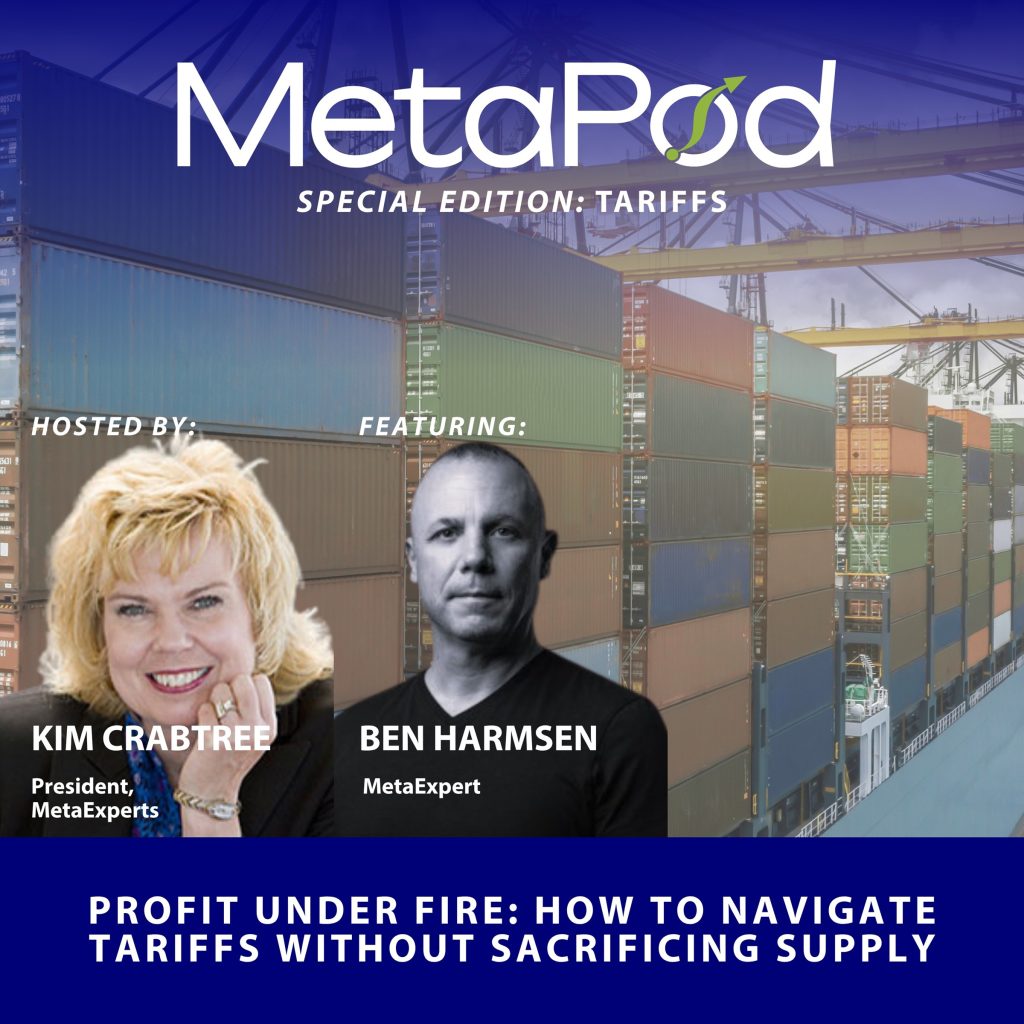
When tariffs rise overnight, manufacturers and distributors can see hard-won margins evaporate just as quickly. In a recent MetaPod special-edition episode, MetaExperts’ Kim Crabtree sat down with Ben Harmsen, Master Black Belt, Lean Six Sigma, and 20-year supply-chain veteran, to unpack a real-world case study that kept an aftermarket automotive company profitable despite steep new duties.
Why This Case Study Matters
A company was facing $80 million in annual revenue at risk. A majority of their SKUs were sourced from high-tariff regions, and they needed to balance cost, service levels, and long-term resilience.
Ben’s team stepped in, facing a perfect storm: rising U.S. import tariffs, volatile freight costs, and pandemic-era disruptions. Instead of scrambling, they deployed a structured, data-driven response that generated immediate savings and a road map for nearshoring.
SKU-Level Cost Visibility and Rapid Scenario Modeling
The first move was dissecting the product portfolio, SKU by SKU. By quantifying landed cost, including tariffs, freight, and duties, Ben identified which part numbers drove the largest margin erosion. This granular insight informed every downstream decision, from repricing to alternative sourcing.
Even if tariffs haven’t hit your category yet, keep your landed-cost model current. The more detailed the data, the faster you can pivot.
Next, the team built a rapid scenario model to test “what-if” assumptions. Using tools such as Failure Mode and Effects Analysis (FMEA), they quantified risk, prioritized high-impact SKUs, and set trigger points for action.
Diversify the Supplier Footprint
Ultimately, Ben activated a multi-country sourcing strategy:
- Vietnam for lower-duty assemblies
- Mexico for USMCA compliance and faster transits
- U.S. plants already in place, expanded for critical SKUs
This trimmed dependence on any single region and cut China exposure by 15% in the first year.
Tariff Engineering & HTS Reclassification
Working with trade-compliance specialists, the team:
- Audited Harmonized Tariff Schedule (HTS) codes
- Shifted light assembly/packaging to Mexico to qualify for USMCA benefits
- Reduced dutiable value on inbound shipments.
These moves legally minimized duty outlays without sacrificing quality or lead times.
Transportation Strategy Reset
Tariffs weren't the only headwind – congestion and rate spikes lurked, too. The solution was higher safety stock on A-items, a mix of full-container, less-than-container, and strategic air freight, and pre-booked container slots to lock in capacity before peak seasons. Although logistics costs rose short term, the company avoided stock-outs and expensive spot rates.
Measurable Results
Ben and his team achieved:
- $80 M+ in revenue protected
- Price increases limited to under 10%
- 15% China exposure reduction first year
- Road map for near-shoring and long-term resilience
These outcomes met and in areas exceeded initial expectations. More importantly, the process instilled a proactive, data-driven mindset that will serve the company through future shocks.
Lessons You Can Apply Today
- Model before you move. Even a basic scenario model beats guessing.
- Diversify early. Multi-country sourcing isn’t optional anymore.
- Leverage trade agreements. USMCA, CPTPP, and others can offset tariff pain.
- Balance shirt and long-term plans. Quick wins (e.g., air freight) buy time for structural fixes (e.g., near-shoring).
- Make resilience a habit. Supply chain risk management is continuous, not a one-and-done project.
Connect and Learn More
Whether tariffs, pandemics, or labor shortages strike next, the companies that model risk, act decisively, and iterate quickly will emerge stronger. To connect with Ben and other MetaExperts, visit metaexperts.com.
MetaPod offers a wealth of knowledge and expertise for operational executives and organizations seeking to optimize their operations and supply chains, as well as common challenges such as digital transformation, the forever labor shortage, and doing more with less. Listen and subscribe today for more insightful and engaging discussions on operational excellence, leadership, growth strategies, and organizational transformation.