

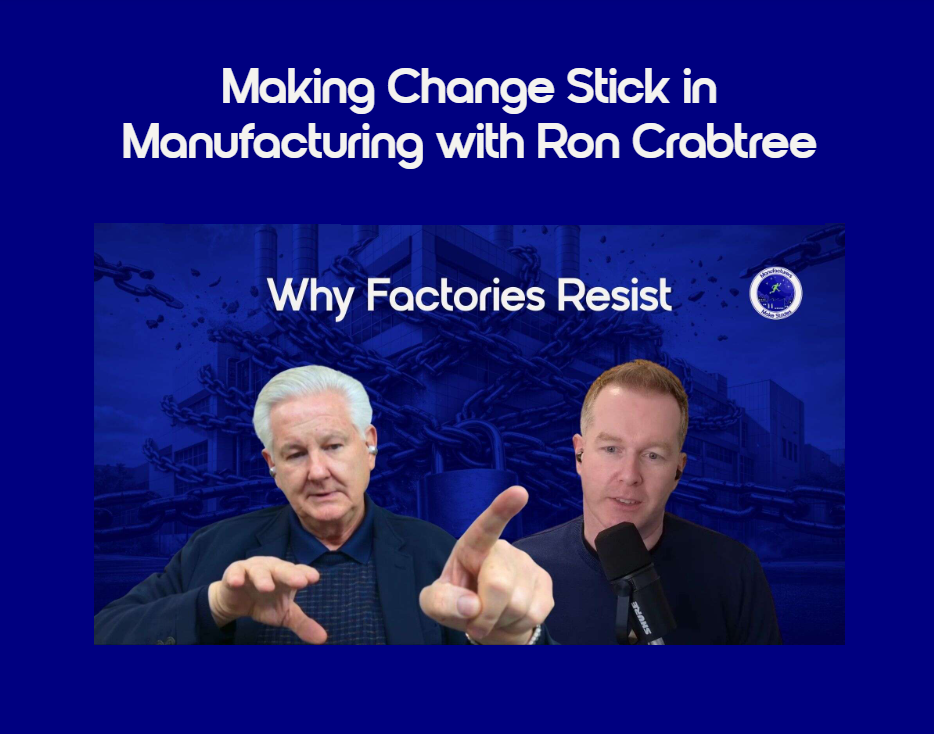
Change is constant in manufacturing, but successful change is not. Ron Crabtree recently joined host Martin Griffiths on an episode of Manufacturers Make Strides to share his perspective on why so many improvement efforts stall out on the shop floor. Change rarely fails because the idea is bad. It usually fails because leaders do not build the right foundation for people to understand it, believe in it, and act on it. For manufacturing leaders, plant managers, and continuous improvement teams, this is a critical distinction.
Change Resistance is a Signal, Not a Problem
One of the biggest takeaways from the episode is that resistance from the shop floor should not automatically be seen as defiance. More often, it is a sign that something upstream was missed. The vision may have been unclear, the reason for change may never have been fully explained, or maybe employees were told what to do, but not why it mattered to them, the customer, or the future of the business.
Ron emphasizes a simple truth: people will not accept a change they do not understand. This matters because too many manufacturing organizations still rely on a top-down approach. They roll out training, announce a new initiative, or implement new technology and expect adoption to happen naturally, when in reality, this rarely works on its own.
Why Lean Training Alone Does Not Create Lasting Improvement
A major theme throughout the episode is that training is not transformation. Ron points out that many organizations believe they can run some Lean Six Sigma training, introduce a new digital tool, or talk about AI and expect meaningful change to follow, but training without structure, leadership alignment, and employee buy-in often leads to frustration instead of progress. For change to stick, teams need more than information. They need direction, context, support, and clarity around what success looks like, and this starts with leadership doing the hard work up front.
Start With a Clear Outcome and a Defined Problem
Ron keeps coming back to the idea of getting hyper-focused on the outcome. Before launching any improvement initiative, manufacturing leaders need to define the problem clearly. What exactly are you trying to improve? Throughput, quality, customer experience, employee retention, cost, speed? Then ask, what does good look like?
Without that level of precision, teams end up working hard without alignment, creating confusion, mixed priorities, and weak results. Ron’s advice is to sharpen problem definition skills first, because if you are vague about what you are solving for, the rest of the effort will drift.
A Better Way to Lead Change in Manufacturing
Ron shares a practical framework for assessing whether change has a real chance of success, which comes down to three factors:
- Discomfort: Do people truly believe the current state is no longer acceptable?
- Vision: Do they understand what the future state looks like and why it matters?
- Skills: Do they have the capabilities needed to execute the change?
If one of those three areas is weak, the odds of success drop fast. This is what makes change management in manufacturing so important. Leaders cannot just focus on process design. They also have to think about stakeholder alignment, communication, and readiness.
Ron also advocates for using tools like project charters, steering committees, and value stream mapping to bring structure and visibility to improvement work. These tools help teams define scope, assign accountability, and create shared understanding before major changes hit the floor.
Involve the People Closest to the Work
Another standout insight from the episode is Ron’s simple exercise: ask employees, “What makes you crazy?” It is a straightforward but powerful way to surface process pain points from the people who deal with them every day. Instead of assuming leadership already knows the biggest issues, this approach invites frontline workers into the conversation early, uncovering problems and building ownership. When people see that their frustrations are being heard and addressed, they are much more likely to support the change that follows.
The bottom line is that change fails on the manufacturing floor because organizations often focus too much on systems, tools, and training, and not enough on clarity, trust, and engagement. If you want change to stick, start by defining the outcome, explaining the why, and bringing the people closest to the work into the process.
Listen to the full episode of Manufacturers Make Strides to learn more. For additional expertise and insights, connect with Ron on LinkedIn or visit MetaExperts.com.