

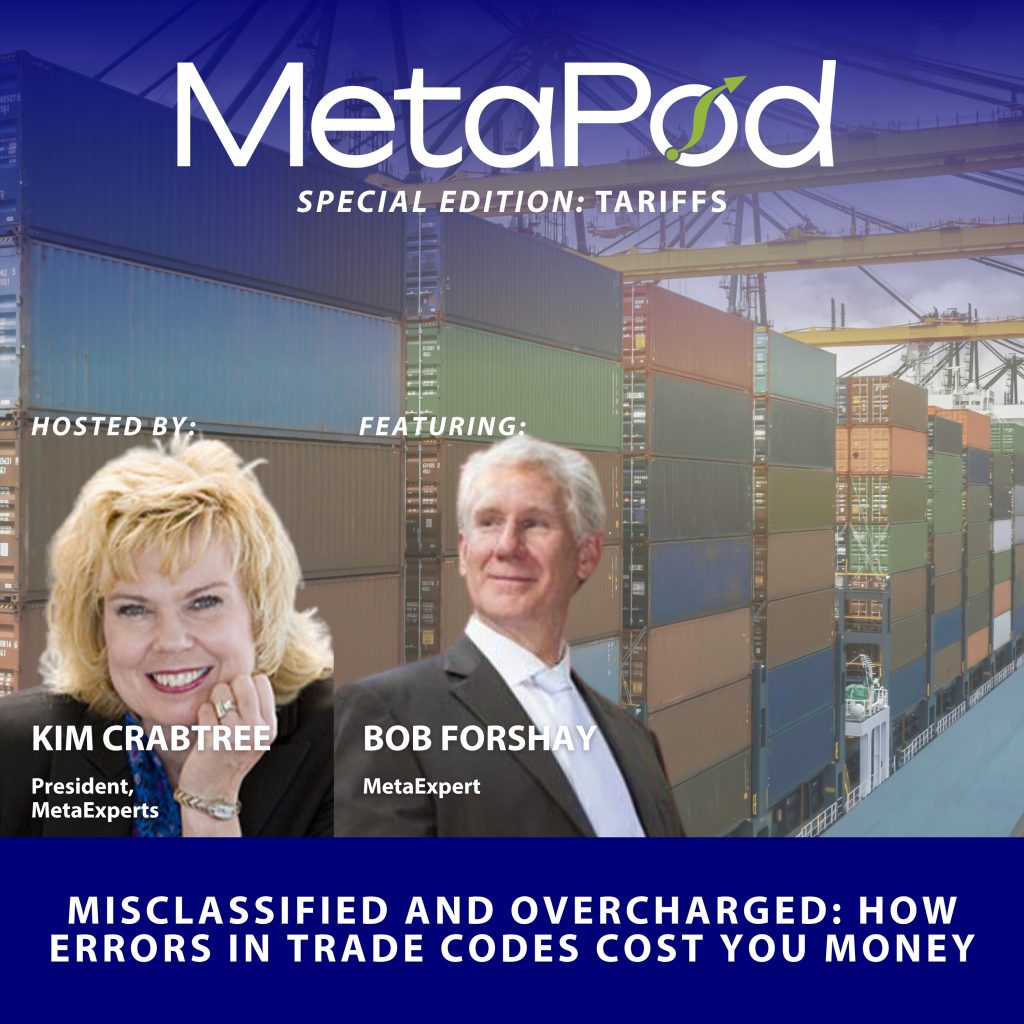
When most manufacturers talk about tariffs, the conversation typically centers on headline duty rates or the latest geopolitical wrinkle. In this MetaPod special-edition episode, MetaExperts’ Kim Crabtree and Bob Forshay discuss how your real exposure often hides in plain sight: the Harmonized Tariff Schedule (HTS) code printed on your commercial invoice. Misclassify a shipment and you could face surprise duties, delayed clearances, and a paperwork nightmare that erodes profit faster than any duty hike.
Classification Is a Full-Time Job
Bob has managed global supply chains since the 1980s, and early in his career, dedicated import/export staff handled HTS assignments. Today, leaner teams often gloss over the details until customs flags an error. He warns that classification is “really a full-time job if you do any amount of import/export at all.” When a client recently discovered its last in-house expert had resigned, they scrambled to rebuild lost knowledge and paid heavily for previous “honor system” codes that no longer fit updated tariff language. It is important for organizations to assign clear ownership for HTS maintenance and keep cross-training documentation up to date.
Start With Industry Benchmarks, Then Validate
For new products or markets, Bob recommends talking to peer companies and freight forwarders – people who know which codes earn the most favorable rates and have successfully withstood audits. But this is just the starting point! Technology shifts, material substitutions, or new country-of-origin rules can instantly invalidate yesterday’s code.
Organizations can use the official HTS search portal to drill into primary headings, subheadings, and segment codes. Pay special attention to trade-agreement notes and secondary listings that may reduce (or ratchet up) duty rates.
Beware the Three “Packaging Paths”
How a shipment is configured can swing your duty bill dramatically:
- Finished goods: Often, the highest rate
- Sub-assemblies: Sometimes lower but require on-shore value-add.
- Piece parts: Lowest rate in many cases, but only if parts are individually receipted.
During the episode, Bob shares a story of a U.S. importer who declared a “kit” (single HTS code) to grab a lower duty, even though the shipment was two boxes with one main unit plus loose accessories. Receiving needed discrete SKUs, triggering inventory mismatches, extra labor, and zero traceability if spares had to be returned. The company saved pennies on duties but spent thousands fixing its ERP data. Ensure your purchase order, commercial invoice, and bill of lading align exactly with how inventory will be received to help avoid a similar problem.
Customs Decisions Are Final
Changing codes retroactively can invite audits, delay clearances, and sometimes raise rates. Worse, there’s no formal appeal once U.S. Customs issues a final ruling. Instead, Bob urges importers to proactively request binding rulings or reference similar case decisions before changing a code. If you must reclassify for a better rate, build an airtight engineering dossier and legal rationale first.
Two Common Blind Spots That Blow Up Budgets
Bob shares two common blind spots that blow up budgets:
- International Code Mismatch: The United States shares a six-digit base with around 200 countries, but sub-codes diverge. A shipper’s foreign declaration can misalign with U.S. segments, creating unexpected duties at the border.
- Invoice Typos: Bob has seen one stray digit on a commercial invoice trigger tens of thousands in extra fees. Always cross-check shipper docs, freight-forwarder records, and purchase orders in every single load.
Connect and Learn More
Correct tariff classification isn’t glamorous, but it’s one of the most controllable levers you have in an era of volatile trade policy. If you have further questions about trade codes, you can connect with Bob and other MetaExperts at metaexperts.com.
MetaPod offers a wealth of knowledge and expertise for operational executives and organizations seeking to optimize their operations and supply chains, as well as common challenges such as digital transformation, the forever labor shortage, and doing more with less. Listen and subscribe today for more insightful and engaging discussions on operational excellence, leadership, growth strategies, and organizational transformation.