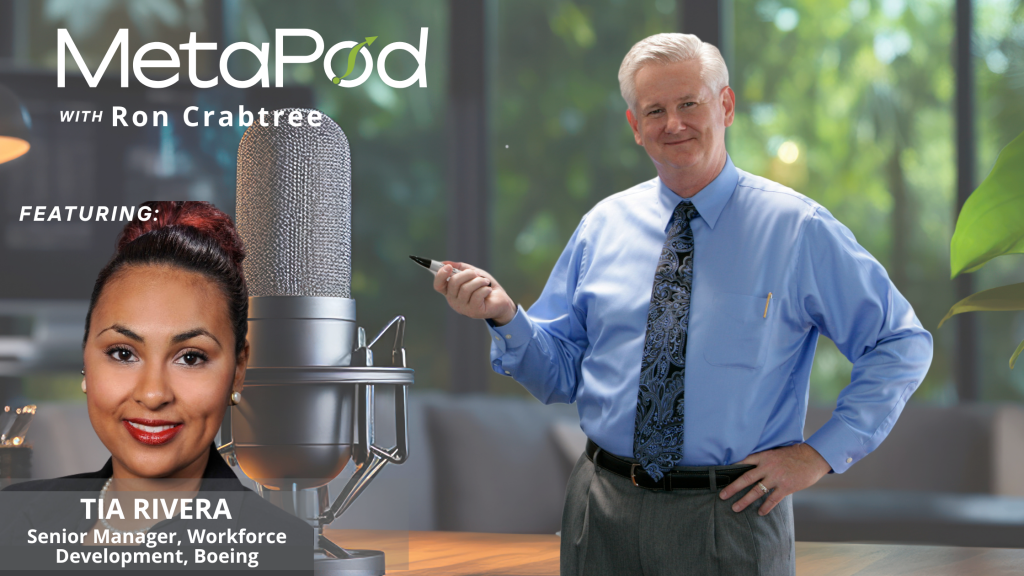
The forever labor shortage is here to stay, and in industries like manufacturing, aerospace, construction, and maritime, the competition for skilled workers is only getting tougher. In the latest episode of MetaPod, host Ron Crabtree speaks with Essentia (Tia) Rivera, Senior Manager of Workforce Development at Boeing, about how organizations can move beyond reactive hiring and start building sustainable, long-term talent pipelines. With experience ranging from aligning training programs with actual job requirements to leveraging existing employees for internal growth, Tia offers a practical, field-tested blueprint for tackling one of the toughest challenges facing businesses today.
Rethinking Workforce Strategy
Most organizations still rely on a “post and pray” approach to hiring, which is simply posting a job and hoping the right candidate applies. However, in today’s market, this is not enough. A strategic workforce plan means thinking beyond immediate vacancies. Leaders need to ask:
- Are we struggling to find candidates with the right skills?
- Do we have high turnover in critical roles?
- Are we building and maintaining mutually beneficial partnerships with high schools, community colleges, military programs, and technical training providers?
Without intentional collaboration and hiring directly from these programs, well-designed educational partnerships can fail, damaging trust and weakening future talent streams.
Aligning Training with Job Requirements
A critical step is ensuring training programs match the real skills needed on the job. This begins with clarity around competencies, proficiency levels, and standardized language, so both industry and educators understand expectations.
Tia stresses the value of a skills matrix, a living document that goes deeper than job descriptions. It details exactly which skills are needed on day one, how proficient employees should be, and how those skills will evolve over the next three to five years. This tool guides curriculum feedback for academic partners, helps track employee progress and training needs, and encourages self-directed development for future roles. Without this alignment, pipelines produce candidates who may graduate from training programs but lack the competencies to succeed in the field.
Leveraging Internal Talent for Growth
Existing employees are a gold mine for retention and skills growth if organizations give them clear pathways for advancement. Tia highlights Boeing’s mechatronics technician role as an example: a mid-level entry point supported by an external talent pipeline from 11 aligned schools in Washington state. As a result, they have seen 30% of internal promotions into higher-level maintenance mechanic positions now coming from this pool, and these employees upskill in half the time of other candidates.
To make internal mobility work, companies must:
- Identify barriers (certifications, time, cost)
- Keep training pathways realistic and functional
- Assign career navigators or mentors to guide employees through development
- Standardize mentoring processes to make them scalable
Sustaining Talent Pipelines Through Partnerships
Too often, workforce partnerships are treated as short-term fixes rather than long-term investments. Tia advocates for cross-industry collaboration to keep pipelines active, even between hiring cycles. For example, two companies hiring different segments of the military community – service members and spouses – could partner to offer dual-job relocation opportunities. This not only benefits the companies but also the employees and their families.
Small and mid-sized companies can contribute by offering internships, teacher training, and clear hiring pathways, ensuring their industry’s overall talent ecosystem remains healthy.
Funding and Public-Private Partnerships
Building and sustaining pipelines isn’t free, but it doesn’t have to fall entirely on one company’s budget. Tia points to Boeing’s Core Plus Aerospace curriculum, developed in partnership with industry and supported by the state of Washington with $700,000 annually for aerospace programs (plus additional funding for maritime and construction). By aligning with existing career technical education frameworks and seeking state, federal, and apprenticeship funding, companies can scale workforce development efforts without shouldering the entire financial burden.
Connect and Learn More
Tia’s advice boils down to three critical actions:
- Know exactly what skills you need, now and in the future, and be able to communicate them clearly to external partners.
- Create and maintain internal pathways so current employees see real opportunities for growth.
- Collaborate across industries to share responsibility for keeping pipelines strong.
If you have additional questions or would like to learn more about building your organization’s talent pipeline, you can get in touch with Tia by connecting with her on LinkedIn. You can also get in touch with Ron via email at metapod@metaexperts.com or connect with him on LinkedIn.
MetaPod offers a wealth of knowledge and expertise for operational executives and organizations seeking to optimize their operations and supply chains, as well as common challenges such as digital transformation, the forever labor shortage, and doing more with less. Listen and subscribe today for more insightful and engaging discussions on operational excellence, leadership, growth strategies, and organizational transformation